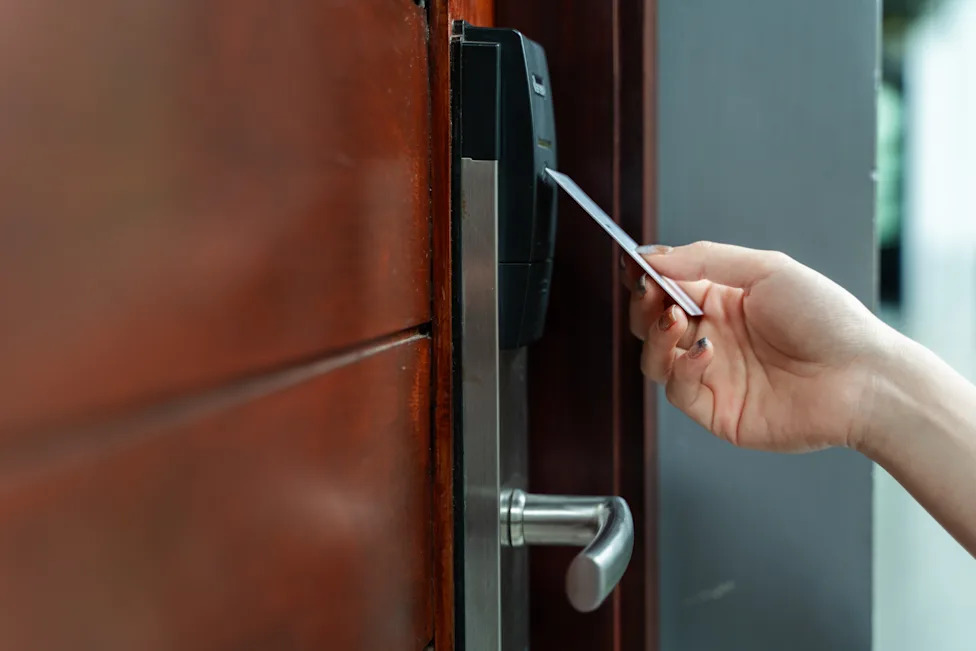
Hotels aren’t inherently unsafe, but sleeping in a building full of strangers far from home can certainly stir up some discomfort. This is especially true if you’re traveling alone and don’t know what security measures are in place at your hotel.
To find out how you can keep yourself as safe as possible during your next trip, we asked travel security and self-defense experts to share their top hotel safety tips. Some are obvious, like locking the deadbolt and closing the blinds, but those alone might not be enough.
1. Choose a reputable hotel with security infrastructure
While you might be able to find a rock-bottom price at a roadside motel that hasn’t been updated since the ’80s, you’ll probably feel a bit more secure at an up-to-date property with a clear, trustworthy reputation.
Julie Waite, cofounder of Streetwise Defence, a U.K.-based self-defense training organization, recommends reading through the hotel’s customer reviews before booking. Keep an eye out for words like “safe” and “well lit” as you skim, she says. If other guests felt secure during their stays, this is a good sign.
It’s also worth checking which safety measures are already in place. Hotel safety is most effective “when it combines attentive travelers with strong hotel operations,” says John Beck, regional director of operations at Crowne Plaza HY36, an IHG Hotels & Resorts property in Midtown Manhattan. He recommends choosing hotels with “robust security protocols,” like controlled access, proper lighting and CCTV.
2. Avoid late-night check-ins
If at all possible, check into your hotel room as close to the beginning of your check-in window as possible, and avoid arriving late at night. Waite says it’s easier to “spot anything sketchy” during daylight hours, and it’s generally safer to check in alongside other guests rather than being the lone traveler in the lobby at 11 p.m.
By the time the hotel’s night shift starts, the property will be operating with a limited crew. Checking in before it gets dark helps reduce safety risks, especially for solo travelers, and makes it much easier to feel settled and safe.
3. Request an upper-floor room
“Avoid ground-floor rooms,” says Waite. “They’re easy targets and offer less privacy.” Instead, floors two and three are the sweet spots for security, according to Waite — “high enough to deter break-ins, low enough for emergency escape.”
Carrie Pasquarello, CEO of travel security consultancy Global Secure Resources, says floors four through six can be safe bets too, and they’re better for guests hoping for a view while still staying safe. She also recommends requesting a room away from stairwells and elevators, and, if possible, avoiding adjoining rooms.
4. Always ask for two room keys
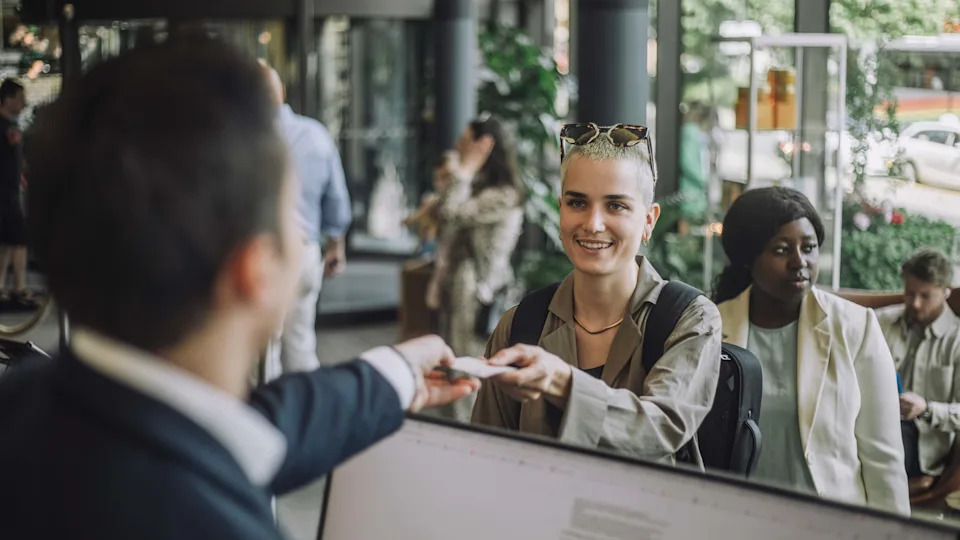
Even if you’re traveling alone, asking for two room keys can help signal to would-be wrongdoers that they shouldn’t mess with you. It “creates the impression you’re not alone, which can deter opportunists,” says Waite. Plus, the second key “gives you a backup if one is lost or stolen,” so you won’t end up locked out of your room. If your room key is lost or stolen at any point during your stay, report it to the hotel immediately and have them deactivate the old keys and generate a new set of cards.
Beck has another word to the wise about key cards: “If your hotel uses key cards that display the property’s name or address, ask whether generic or unbranded key cards are available,” he says. This helps reduce the chances that someone can figure out where you’re staying and use that information against you.
This might seem like it should go without saying, but you should also emphasize to the hotel staff that no one should be given a copy of your room key, other than you and anyone else you specifically designate. The BBC recently reported a story about a woman in the U.K. who was assaulted in her hotel room by a man who was given a key after simply asking for one at the front desk and claiming to be the woman’s boyfriend.
5. Don’t announce your room number or location
Maintaining your privacy is a big part of hotel safety, and one good strategy is keeping your room number under wraps. Waite recommends asking reception not to say your room number aloud. Have them write it down instead, but don’t keep the written room number and room key together. “Your room number is part of your personal security while traveling and should be treated as private information,” says Beck.
Keeping your location on the down-low in general is smart when traveling. Beck says this means being mindful about what you share on social media. “Posting real-time updates that reveal your exact location or room view can unintentionally advertise where you’re staying,” he says. Even if it’s a little less fun, consider waiting until you’re back home to post detailed information about your trip.
6. Inspect your room before closing the door
Once you’re upstairs, don’t get comfortable too quickly. First, give your room and floor a once-over to look for any red flags. Waite recommends waiting to close your door until after you’ve confirmed everything is secure.
First, look under the bed, in wardrobes and behind curtains to “make sure no one is hiding,” says Waite. You should also scan the room for hidden cameras. While it’s rare enough, it’s not unheard of. Waite says the easiest way to check for cameras is by using the flashlight feature on your phone to spot reflections inside of clocks, lamps, smoke detectors and electrical outlets.
She also recommends familiarizing yourself with the fire escape route, scouting the hallway layout near your room and locating nearby staff offices. Joe Cronin, president of International Citizens Insurance, agrees with this approach, adding that “in a real emergency, you won’t want to be reading signs in the dark” or feeling confused as you search for an exit. Finally, Pasquarello recommends checking that the room phone works, in case you need it.
7. Lock up tight, and don’t answer for just anyone
“Once you’re in the room, use every locking mechanism available,” says Cronin, citing “the deadbolt, chain and even a portable door lock or rubber doorstop if you carry one.” Waite and Pasquarello agree that it’s important to check all doors and windows to make sure they’re locked and that all locks function properly. If any of the locks in your room don’t work, “ask to be moved,” says Waite.
Next, pop the “Do Not Disturb” hanger on your door and leave it on throughout your stay, even if it means skipping daily linen changes. If your room needs a tidy, temporarily remove the sign during the designated cleaning window, then replace it. Once the sun goes down, Waite recommends closing curtains and windows for privacy and security.
Of course, it’s not out of the ordinary to get a knock on your hotel room door — usually from housekeeping or room service — but don’t be quick to answer before confirming who it is. If you’re not expecting a visitor and “someone knocks on your door claiming to be hotel staff, verify their identity with the front desk before opening,” says Pasquarello. You can also use the peephole to confirm who’s outside, but “you are under no obligation to answer,” she says.
8. Consider traveling with personal safety gadgets
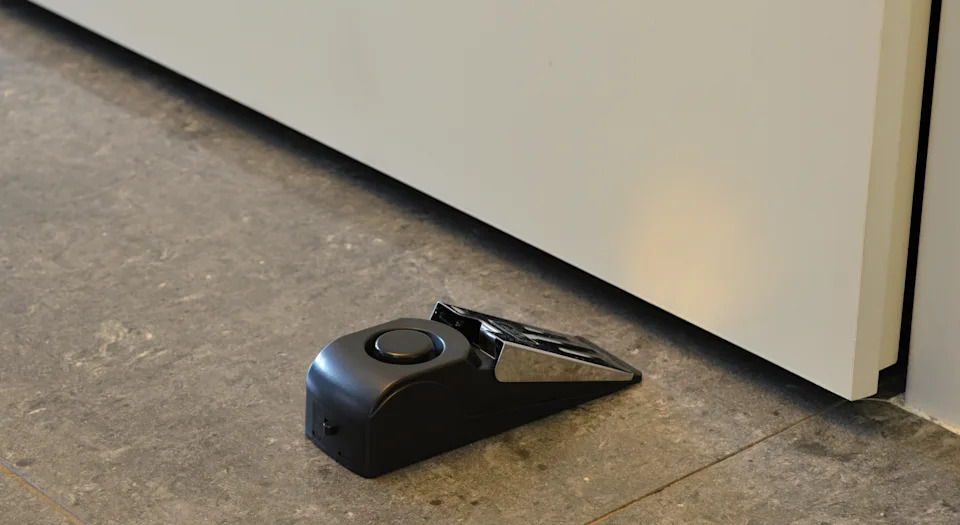
No matter how many built-in security measures are in place at your hotel, certain risk factors will unfortunately always be at play. To help mitigate these risks as much as possible, travel security experts recommend packing your own safety gadgets, like door wedge alarms and portable door locks.
“An alarm can provide an additional layer of security and alert you to unauthorized entry attempts,” says Pasquarello. “Even if you secure the door with the primary lock, it may still be possible for others to enter using a master key,” she says, “or if another guest is mistakenly assigned to the same room.” Waite agrees that a door wedge alarm is a “loud, portable and inexpensive” way to stay alert to any unwanted visitors, and Cronin says even standard rubber door stops can “can make a real difference.”
Portable door locks are another worthwhile option for travelers. Waite says they fit most doors and can prevent them from opening from the outside, even if the intruder has a key. As a self-defense expert, Waite does not recommend pepper spray or self-defense key chains, as they’re considered illegal weapons in some places and can also backfire or be used against you.
9. Be smart with your valuables
If you’re traveling with valuables like jewelry, watches or cash, make sure they’re securely put away before you leave your room. Most hotel rooms have complimentary guest safes for this purpose, and it’s wise to get in the habit of using them. You can also bring your valuables with you when you leave, but carrying around large amounts of cash, for example, may actually be less safe than leaving it back at the hotel.
Waite says to be smart about how you use the room safe too. “Set your own code and test that common defaults don’t work,” she says. Make sure the safe is working properly before you lock anything inside of it, and if your room doesn’t have a functioning safe, ask the hotel staff for a solution.
10. Trust your gut and report incidents
After you’ve done all the practical things, do a gut check. If you feel unsafe or uncomfortable about any aspect of your room, “return to the front desk and request a room change,” says Pasquarello. Worst case, you may even want to switch hotels if the security issues seem pervasive. At the end of the day, Pasquarello recommends trusting your instincts.
She also says it’s important to report safety and security incidents to hotel management, even if they turn out to be false alarms. “Reporting concerns can help hotels address vulnerabilities and improve safety for future guests.”
Dana Yewbank, Writer