The 38-year-old builds on the same strength-focused messaging that made her fitness campaign go viral.
Key takeaways:
- Hilary Duff is one of four cover stars for the 2026 Sports Illustrated Swimsuit issue, wearing a white one-piece suit in a photo captured by Kat Irlin on the Turks and Caicos island of South Caicos.
- Duff’s “Stronger Not Smaller” campaign with Ladder promotes strength over thinness, with CEO Greg Stewart noting a shift in how women view fitness and empowerment, coinciding with a broader evolution in attitudes towards women’s bodies.
- Duff’s campaign has sparked conversations about body image, wellness culture, and the impact of celebrity messaging, with some praising her for promoting strength and others noting the privilege and potential pressures associated with celebrity body image narratives.
Hilary Duff is doubling down on her “Stronger, Not Smaller” mantra and explaining what she hopes women take away from it.
“I loved the reaction to ‘Stronger, Not Smaller,'” Duff told Women’s Health. “I love to move weights. I love to be strong. I love to feel strong, and that looks like many different shapes and sizes.”
The 38-year-old singer and actor, who is currently on the Lucky Me tour, said the message is about more than building muscle. It’s also a rejection of the pressure women have long faced to make their bodies smaller.
“It’s not as powerful to want to shrink and be a smaller version of yourself,” she said.
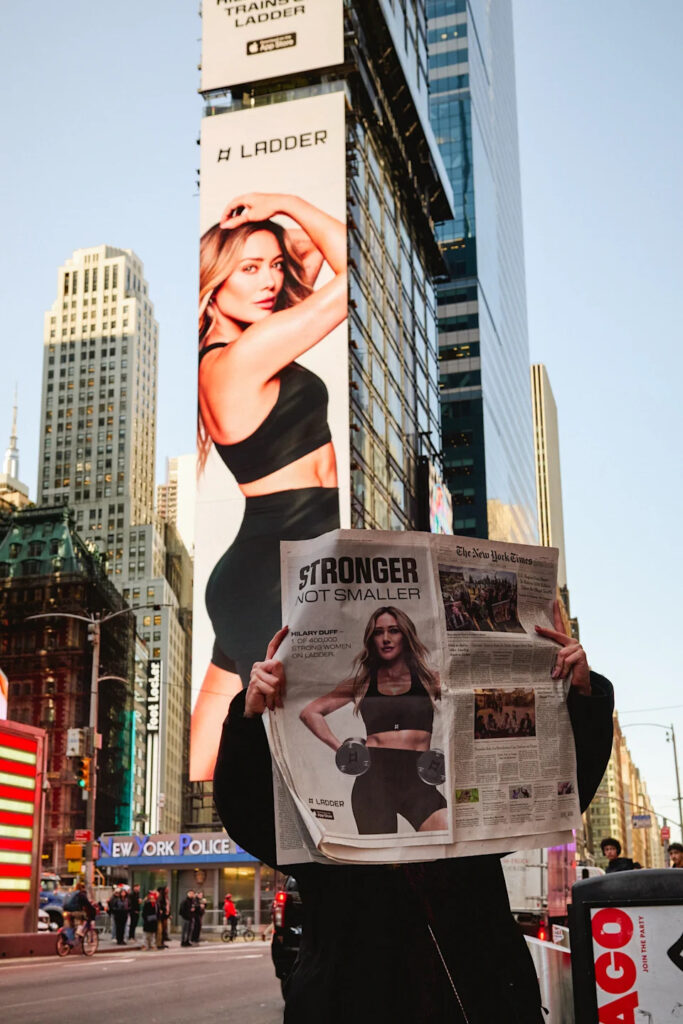
The phrase first became a rallying cry in April when Duff was announced as a celebrity spokesperson for the fitness platform Ladder. She appeared in a series of photos weightlifting in the gym and a full-page newspaper ad with the three words printed front and center.
“I obviously grew up during that time where all of us were trying to disappear and be waifs, and that’s not natural for my body. … So ‘Stronger, not smaller’ is a huge, impactful statement that really resonates with me,” Duff told Time at the Time 100 red carpet. “I am strong and I do have muscles, and I’ve always been a gymnast. And I used to be embarrassed of my strength, and I just don’t need to be anymore.”
Naomi Boshari, a writer who focuses on body image and social media culture, says the ad stopped her in her tracks for various reasons — from the message itself to the person behind it. The campaign inspired her to write about her initial reactions on Substack.
“Using Hilary Duff for the campaign was impactful for millennials, especially because we grew up in the early 2000s, where thinness was shoved down our throats — with magazine covers highlighting ‘shocking cellulite celebrity photos,’ with Weight Watchers and Kate Moss’s infamous ‘nothing tastes as good as skinny feels’ slogan — and she grew up with us in that environment,” Boshari tells Yahoo. “We saw a change for a few years with the body-positive movement, and we thought the world really had shifted. As soon as Ozempic hit the scene, it felt like a complete reversal back to where things were before. And so, for Hilary Duff to take a stand, to show that strong bodies are beautiful, it gave us a glimmer of hope again.”
To Boshari, Duff’s campaign feels especially timely amid what she describes as a current “skinniness epidemic” online — something Charlotte Markey, a clinical health psychology professor at Rutgers University and author of The Body Image Book for Girls, says women are grappling with right now.
“We’re living in a moment where body positivity, GLP-1 medications, wellness culture and appearance pressures are all colliding. Many women feel caught between wanting to reject unrealistic beauty standards while also feeling intense pressure to ‘optimize’ their bodies. A message like ‘Stronger Not Smaller’ offers an alternative framework that feels less punishing and more humane,” says Markey.
What’s more, Markey adds, “Research consistently shows that when exercise is framed around well-being rather than weight loss, people tend to have more sustainable and positive relationships with movement.”
That impact quickly became clear across social media, where women of all ages and sizes began posting videos of themselves lifting weights at the gym, crediting Duff for the inspiration.

Others praised the messaging while also noting that Duff is still a petite woman whose body largely fits conventional beauty standards.
“In all likelihood, if this statement was said by someone in a larger body, it wouldn’t have been as well received,” said Laura Ghiacy in a TikTok video. “Hilary Duff does happen to benefit from a huge number of privileges, including but not limited to, thin privilege. … That has an effect on how we receive this statement.”
Markey says that tension is part of the larger conversation surrounding celebrity wellness messaging today. “Even more empowering body image messaging can still keep women highly focused on their appearance,” she explains. “Some people also point out that campaigns centered on strength can unintentionally create a new ideal that women feel pressure to achieve. And of course, celebrity body image narratives exist within systems of privilege. Celebrities have access to trainers, child care, nutrition support and beauty resources that are not available to most women.”
Still, Duff’s willingness to publicly unpack the complexities of her body image journey feels especially significant right now. She even did so in the 2026 issue of Sports Illustrated Swimsuit where she was featured as one of four cover stars.
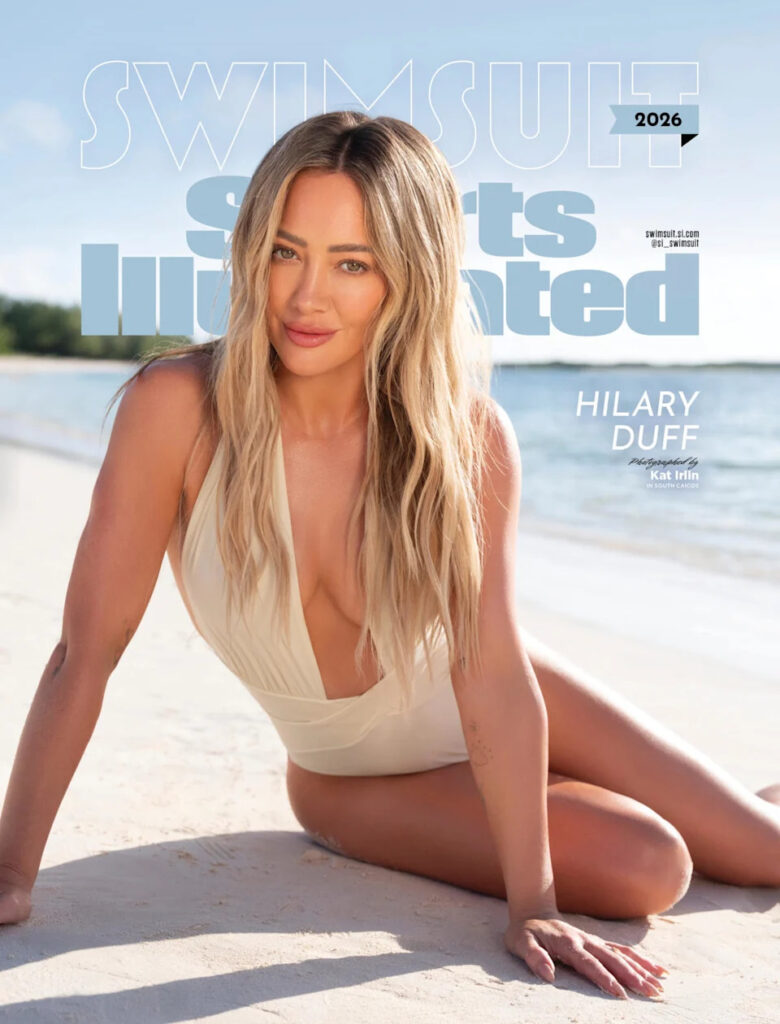
“I’m a mom of four and I’m not a spring chicken. … I don’t typically frolic around in a bathing suit, so it was a little scary,” Duff said of the cover shoot.
She’s also a former child star who grew up in the 2000s tabloid era and experienced constant criticism of her appearance for years. “The amount of pressure I put on myself to look like other people was a lot,” she said, though in her adult years, that mindset has shifted. “I can look at my body now and appreciate all the things it has done for me,” she added. “I no longer find that I am constantly comparing myself — and that is a better place to exist.”
Greg Stewart, CEO of Ladder, tells Yahoo that the timing of Duff’s Sports Illustrated Swimsuit feature “couldn’t be more meaningful.”
“For so long, the conversation around women’s fitness was centered on being smaller, rather than feeling strong, capable and empowered,” he says. “Seeing a global icon like Hilary celebrated at this moment sends a powerful message that strength is aspirational.”
But for her, this shift in messaging has been years in the making. In 2022, the actress posed nude for Women’s Health and spoke candidly about years of insecurity after growing up under the microscope during Y2K celebrity culture. She also opened up about struggling with an eating disorder as a teenager, and how she’s since learned to focus on strength, health and appreciation for everything her body has carried her through.
“I’m proud of my body,” she told the magazine at the time. It’s a sentiment she’s sharing four years later — and it’s striking a chord.