It’s more than a year since Amazon gained creative control over the James Bond franchise. What this has seemingly granted to the world’s most popular superspy is a licence to… wait.
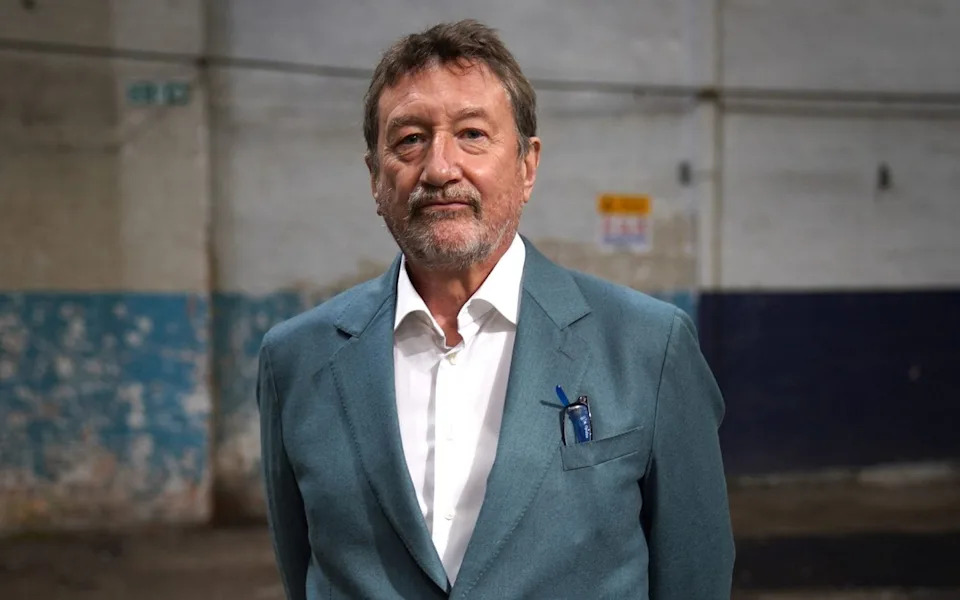
We’re shaping up – easily, at this point – for the longest gap between Bond films since the series began. (The six-year hiatus between Licence to Kill in 1989 and GoldenEye in 1995, caused by legal disputes and MGM’s financial woes, is now certain to be widened: Daniel Craig’s swansong as Bond, No Time to Die, was in 2021.) In the meantime, we have been treated to unending rounds of casting hearsay with no actual announcement. The script, assigned to Steven Knight, creator of Peaky Blinders, is nowhere near ready. No one knows what’s going on.
Anecdotally, this includes the very people who have inherited the brand. A few weeks ago, a colleague, on a European city break at a five-star hotel, overheard fatefully loud remarks from a middle-aged American film executive about Bond (described by him as “an old British spy”) being a nightmare and, above all, a bore. According to this man, whose ears may be burning, management at Amazon MGM Studios is fed up with even thinking about 007’s future. The current limbo has become so tricky that no one expects the next phase of Bond to be a success for the studio at all.
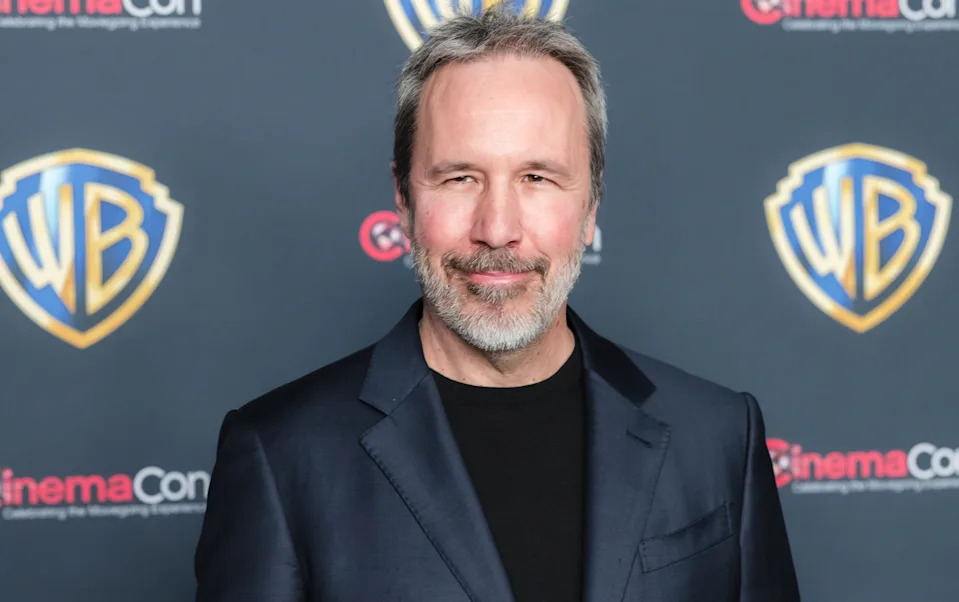
Officially, of course, none of this is true. What we’ll keep hearing until the next one comes out – 2028 at the very earliest, but more likely to be 2029 or beyond – is that they’re waiting to get it just right. Denis Villeneuve, the director who signed on last June, needs a long break first, having just made three Dune films back-to-back (the third of which, currently in post-production, comes out in December). Knight, who recently wrote and produced the Peaky Blinders film, has been fairly busy himself. And doesn’t Bond need a hard reset? After all, they just killed him off. Jumping hastily into a new era would have done no one any favours.
Some of these stipulations may be logical, but piled up they still sound like flustered excuses. Then again, when you think through the situation in full, the delays look understandable for other reasons. Do Villeneuve and Knight, who have never worked together before, have a shared vision we can trust? Who’s really in charge?
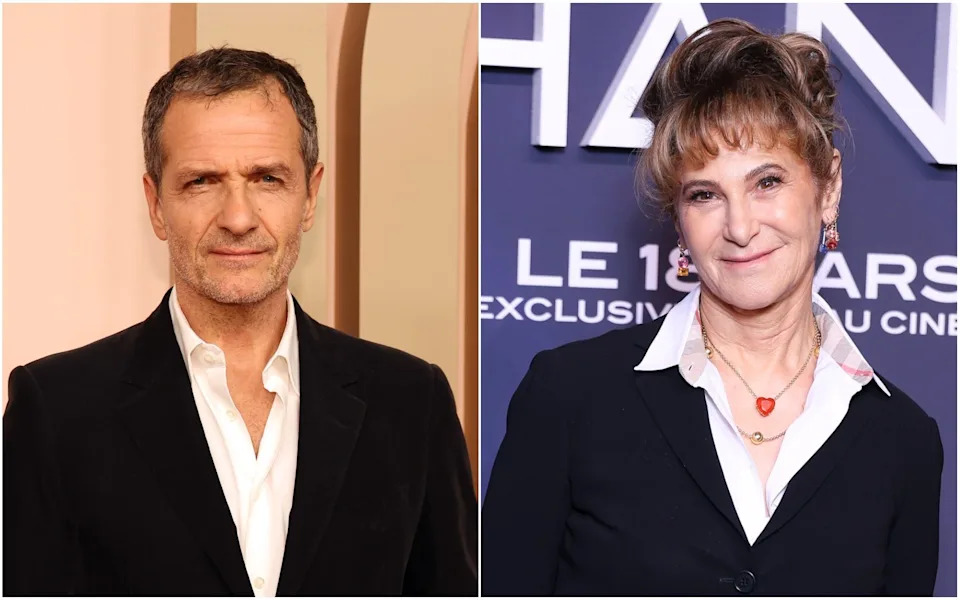
Casting, it’s said, is in the hands of two further industry giants who were enshrined as the producers of “Bond 26” last March: Amy Pascal and David Heyman. You could hardly find better-qualified replacements for Barbara Broccoli and Michael G Wilson, or more calculatedly reassuring proxies, perhaps, than these two. At Sony, she made Spider-Man a phenomenon. He did the same for Harry Potter. The announcements went big on how humbled and honoured everyone has been to get these gigs. But real talk, from all involved, has been thin on the ground ever since.
At CinemaCon in mid-April, an announcement about Bond was expected as part of the Amazon MGM Studios presentation. In effect, they announced that there was no announcement. “When the time is right, we’ll have much more to share,” studio head Courtenay Valenti told the audience.
“Now that the Broccolis are out of the picture, it’s Amazon’s call,” says James Chapman, professor of film studies at Leicester University and author of a book on Bond. “They have bought this incredibly lucrative franchise, one with a very well-established brand identity, and I’m just getting the impression that they don’t know what to do with it.”
Chapman warns that the Bond “fandom” frets that 007’s new custodians may milk it, in a similar way to how Disney has treated Star Wars since buying Lucasfilm, and degrade it. “The Broccolis knew how to make Bond movies,” he adds. “My concern about some of the Amazon executives is if all they know is they have got a franchise, and they’ve probably got a very basic knowledge of it; they probably don’t have a detailed, in-depth knowledge.”
The lack of news, year after year, leaves a void that can only be filled, and very much is, by baseless theorising. Maybe Bond will be younger this time. Or black. Maybe they’ll take the series back in time. Knight has dished out a few remarks in interviews about trying not to be overwhelmed by fan expectations, considering 007 to be a form of folklore, and respecting the legacy of Ian Fleming. He wants his Bond to be “the same but different, and better, stronger and bolder”, he has said.
Extrapolating from Knight’s track record, this has led prognosticators to assume that we’re getting a grittier, more aggressive Bond, with or without a Brum accent, and possibly something semi-adapted from an underrated Fleming novel that hasn’t been done yet. But for all we know, Bond could burst in wearing a tutu and be played by Miriam Margolyes. Absolutely nothing solid has been divulged.
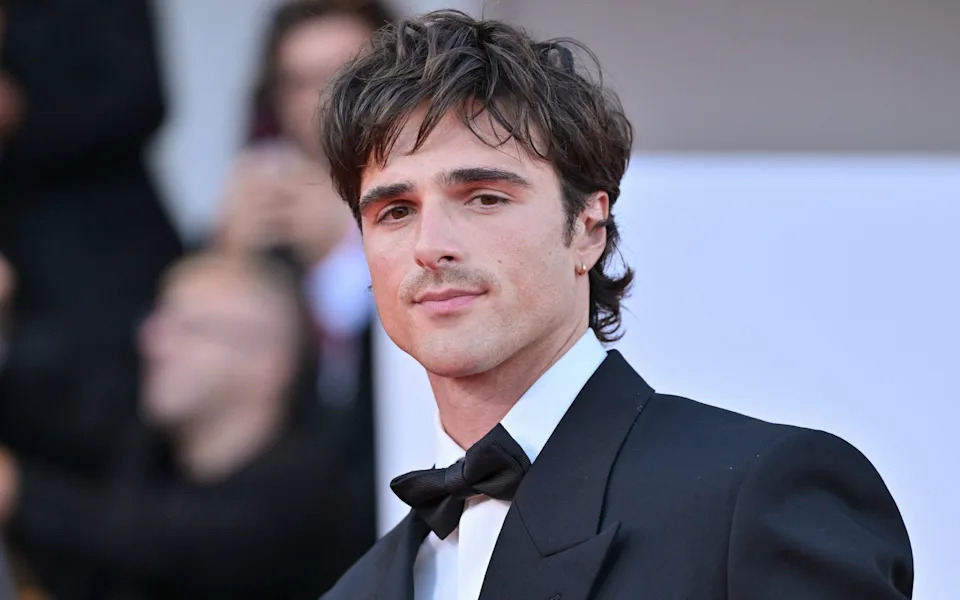
Whenever the casting rumour mill goes through another rotation – most recently it was Jacob Elordi, before that Callum Turner, and before that Aaron Taylor-Johnson – there’s a flurry of excitement that we might be getting closer, mixed with shock-horror about the suitability of each mooted candidate. But straight after the noise subsides, the cold water floods in. The usually reliable media expert Matt Belloni is certain that they won’t cast until the script is ready, and he is certain that it is not. The film analyst Stephen Follows has run the maths, and deduced that history tells us it’s likelier to be someone you’ve never heard of, such as House of the Dragon star Tom Glynn-Carney.
I have my own pet theory, obviously wrong, that Elordi is being eyed up as the baddie, not as Bond, and look forward to that being roundly disproved. In about three years.
This is all teething trouble, of course, because Bond’s new corporate owners are like godparents dealing with an orphan. With that great power comes not only great responsibility, but blind panic. The first film any new Bond actor gets to make is all-important, both for refreshing the tone and refilling the coffers. Executives with an eye on profit margins are sure to be concerned about the financial fortunes of the Mission: Impossible franchise, which became increasingly Bond-esque towards the end – and peaked in 2018, making losses in its final reckoning.
If Bond reached a zenith at the global box office with Skyfall (2012, $1.1bn), which is worryingly possible, it’s bad news for the series. Bond films are notoriously expensive to make, no matter how many luxury watch brands chip in. Spectre (2016) grossed $880m because it wasn’t satisfying, and No Time to Die (2021) – delayed, compromised, or both, by the pandemic – sank lower still with $774m. That’s not a flop, but it’s still a disappointment: everyone in custody of the series will be trying to figure out a foolproof way of doubling it.
The trouble is that there’s no such thing. There are no cheats for making a genuinely thrilling Bond film: it’s hard work. You have to make a rock-solid casting choice, go into production with a smart script that’s ready, and execute it with pace (which has been particularly lacking of late) and wit and panache. It has to be good.
No wonder it’s taking so long, because these circumstances have almost never lined up in 007’s history. They have tried to make do, as they did in Quantum of Solace (2008) – a place-holder sequel to Casino Royale that was shot by the seat of everyone’s pants in the middle of a writers’ strike. This time, they’d be insane to let that happen. It’s easy to imagine how the rights-holders might be bricking it, then, because any old Bond film is not their winning ticket. They could green-light something dodgy, make a huge loss, and rue the day they ever took charge.
Bond would always have the option of going downmarket – but who wants a canned martini from Lidl? We’re in it for the luxury. There’s no hurrying it, and I feel their pain.
Tim Robey